Dual Micro-Frontend Modernization
Nx monorepo (50+ apps) + Bit.dev micro-frontends (legacy). Unified via custom Material Design library.
Role
Senior Software Engineer
Year
2020
Tech Stack
Client
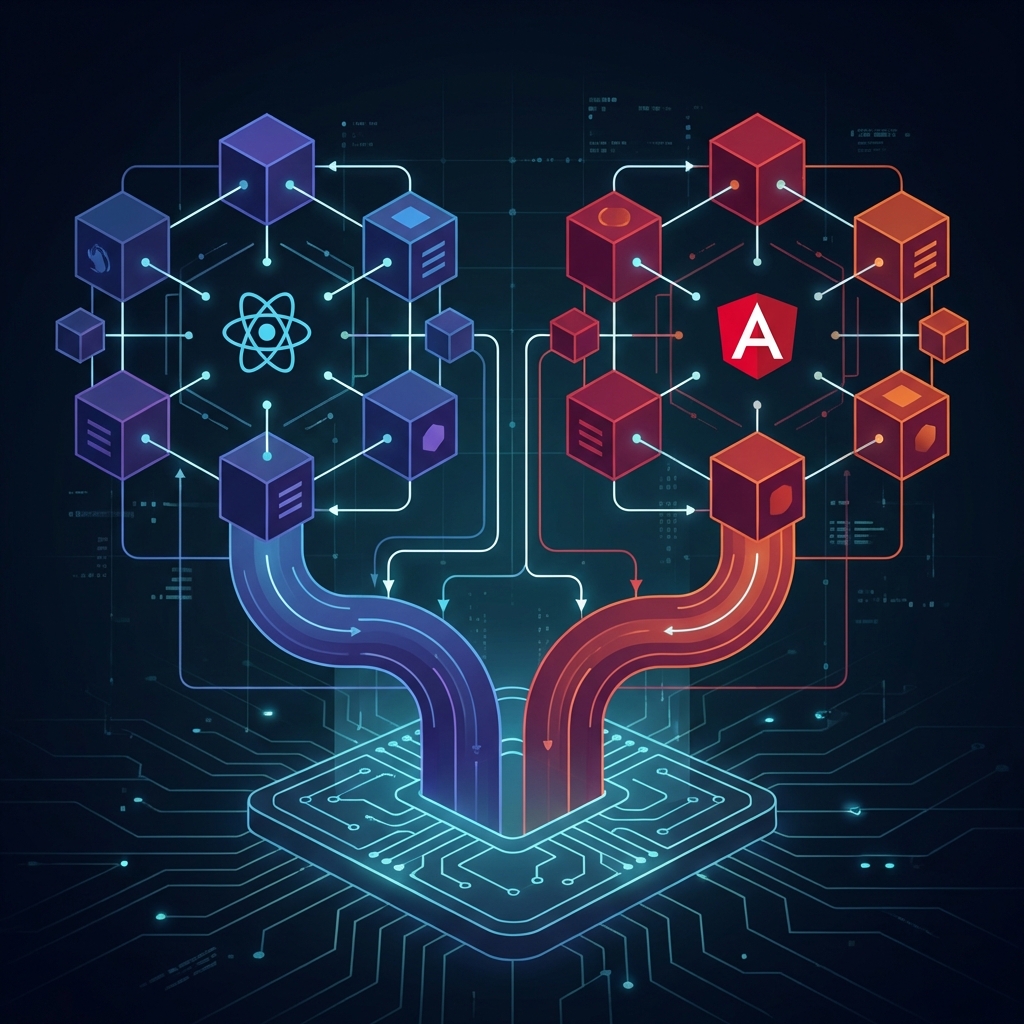
The engagement inherited 60 independently deployed supply chain applications with no shared codebase, no component library, and fragmented deployment infrastructure. Each application maintained isolated dependencies while teams duplicated UI patterns and reinvented identical features across divergent framework versions.
Rather than force uniform modernization, the solution recognized distinct operational contexts. The primary suite of 50 applications consolidated into an Nx monorepo, gaining integrated tooling and coordinated dependency management. The legacy suite of 10 to 12 applications adopted Bit.dev micro-frontends, enabling modernization without the governance overhead of monorepo integration. This architectural divergence was permanent by design. Primary applications served critical supply chain operations requiring cross-application consistency. Legacy applications, often single-purpose tools, did not justify monorepo coordination costs.
Both architectures shared a custom Material Design component library that extended compositional APIs with supply chain-specific components: data grids for inventory views, approval workflows for purchase orders, real-time status indicators for distribution operations. Beyond UI primitives, the library included a flow layer of pre-composed multi-step experiences and a utility layer of hooks for API integration, form validation, and error boundaries. Teams inherited complete feature scaffolds. Storybook documentation provided self-service adoption through live previews, prop tables, and usage examples, eliminating the need for extensive onboarding.
The component library served as the architectural bridge. Design updates propagated across both Nx and Bit.dev implementations, maintaining consistency despite divergent structures. The legacy suite required consolidation before adopting Bit.dev: AngularJS applications were rewritten in React, and older React codebases were upgraded before componentization.
All applications also moved from Pivotal Cloud Foundry and in-house pipelines to GCP using GitHub Actions, with Docker images replacing buildpack deployments. The dual-architecture strategy enabled different migration velocities while preserving shared UI and workflow standards, with adoption exceeding 80 percent.
The dual-architecture strategy enabled modernization at different velocities while maintaining quality standards. The component library achieved adoption exceeding 80 percent, becoming the standard for new development.