Mission-Command via Pair Programming
DoD mission-command apps (Secret Clearance). Pair programming standards eliminate knowledge silos, ensure context.
Role
Principal Software Engineer
Year
2023
Tech Stack
Client
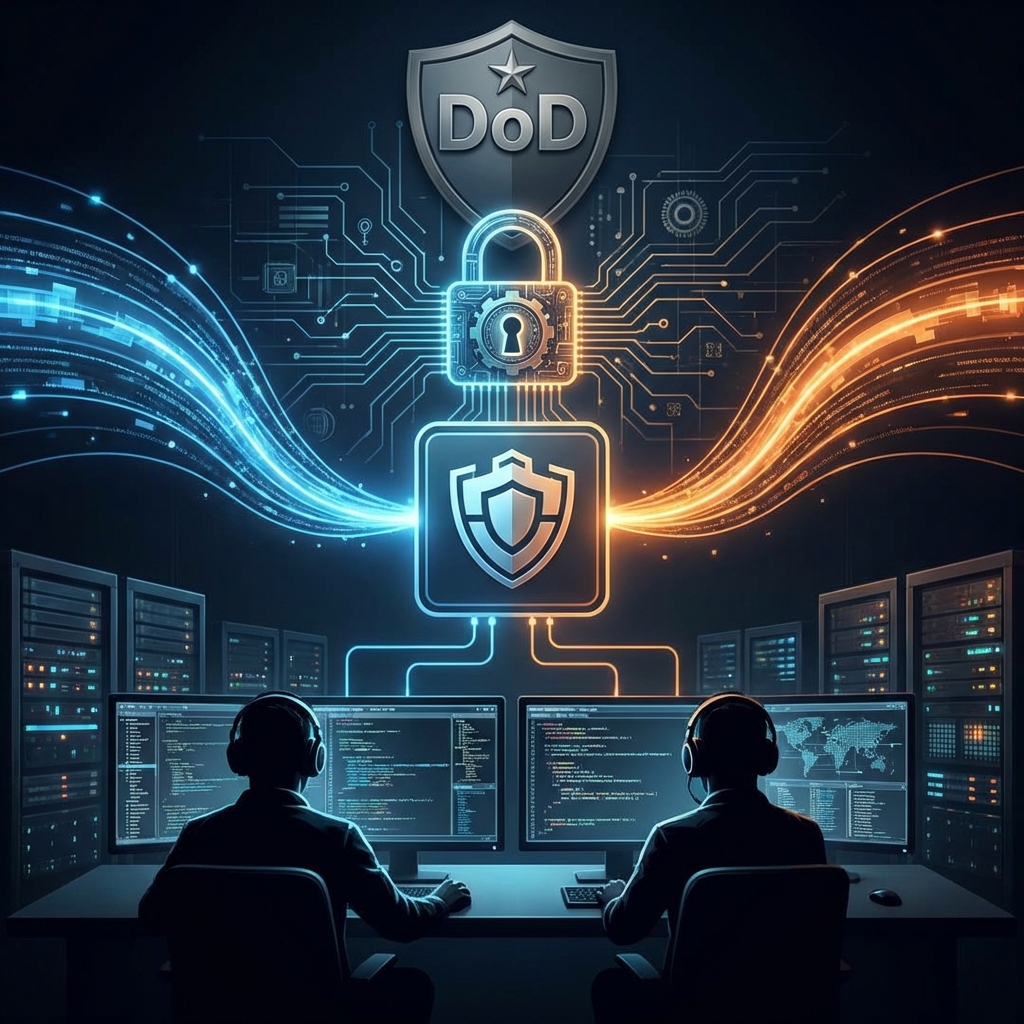
The engagement delivers mission-command applications in Department of Defense environments under Active Secret Security Clearance. The constraint is trust and operational consequence: failures affect readiness and decision-making, and development practices must align to security requirements.
Pair programming is enforced as a production standard. Work is completed by a driver and navigator to distribute context during creation rather than relying on post hoc documentation. This reduces knowledge silos and limits dependency on individual availability for critical system understanding.
Pairing also functions as continuous review. Architectural decisions are evaluated in real time, reducing late discovery during pull request review and lowering the cost of correction. Partners rotate across sprint cycles to prevent static pairing clusters and to spread domain knowledge across the team.
The stack uses Java Spring for backend services and React for user interfaces. Clearance constraints shape how work is performed, including approved environments, permitted communication channels, and documentation handling. Secure SDLC requirements affect dependency updates, external integrations, and deployment validation.
Work balances feature delivery with security rigor. Updates require review processes appropriate to classified environments, and deployments require verification that sensitive information remains protected.
Outcomes
Mandatory pairing and rotation reduced single-owner knowledge risk and supported consistent quality through shared context. Security and clearance constraints were integrated into repeatable practices rather than handled as ad hoc exceptions.